The Sun and Its Layers ☀️
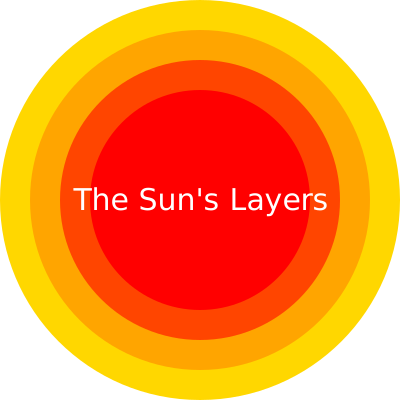
The Sun is a massive, burning ball of gas at the center of our solar system. It's composed of several layers, each playing a unique role in the Sun's life. Let's dive into these layers and discover what makes the Sun shine so bright!
The Layers in Detail
1. The Core
The core is the center of the Sun where nuclear fusion occurs. Temperatures here soar to about 15 million degrees Celsius, making it the powerhouse that generates energy for the entire star.
2. Radiative Zone
Surrounding the core, the radiative zone is where energy moves outward in the form of electromagnetic radiation. It can take thousands of years for energy to pass through this thick layer.
3. Convective Zone
In this outer layer, hot gases rise and cool gases fall in a convective pattern, transferring energy to the Sun's surface. This process creates sunspots and solar flares.
4. Photosphere
The visible surface of the Sun, the photosphere is where light is emitted. It’s what we can see from Earth, glowing in all its blazing glory.
5. Chromosphere
Above the photosphere lies the chromosphere, a thin layer where temperatures rise dramatically. It's visible during solar eclipses as a red ring around the Sun.
6. Corona
The corona is the Sun’s outer atmosphere, extending millions of kilometers into space. It's surprisingly hot and is best observed during solar eclipses or with special instruments.